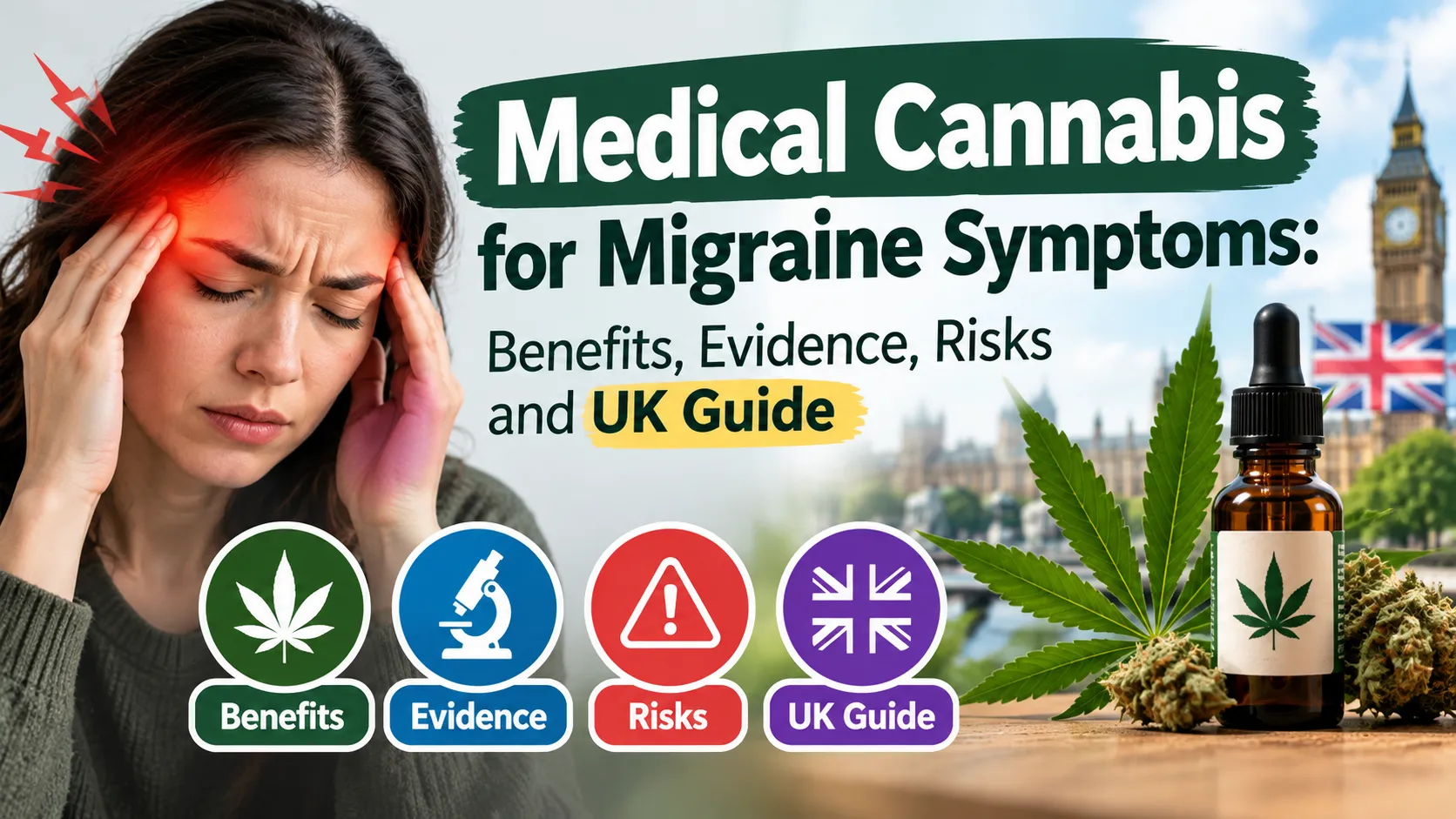
Medical Cannabis for Migraine Symptoms: Benefits, Evidence, Risks and UK Guide

Read Time:12 Minute, 11 Second
Migraine is more than a severe headache. An attack can involve throbbing head pain, nausea, vomiting, sensitivity to light and sound, visual disturbances and other neurological symptoms. For some people, attacks remain difficult to manage despite conventional treatments.
This has led to increasing interest in medical cannabis for migraine symptoms.
Research into cannabis-based medicines and migraine is still developing. A recent randomised controlled trial found that a specific combination of THC and CBD provided greater short-term relief from acute migraine than placebo. However, this does not establish medical cannabis as a standard migraine treatment, and the research involved a specific vaporised cannabis preparation rather than every type of prescribed cannabis medicine.
In the UK, NICE’s current migraine guidance continues to recommend established acute and preventive treatments rather than cannabis as a routine migraine therapy.
This guide explains what is currently known about medical cannabis for migraine symptoms, including pain, nausea, light sensitivity, chronic migraine, potential risks and the UK prescribing process.
What Are the Symptoms of Migraine?
Migraine can occur with or without aura. Typical migraine symptoms can include:
-
Moderate to severe headache
-
Throbbing or pulsating pain
-
Pain on one or both sides of the head
-
Increased sensitivity to light
-
Increased sensitivity to sound
-
Nausea or vomiting
-
Worsening symptoms during normal physical activity
Some people experience migraine with aura. Aura symptoms are usually fully reversible and can include visual changes, pins and needles, numbness or speech disturbance. NICE states that typical aura symptoms develop gradually over at least five minutes and usually last between five and 60 minutes.
A migraine attack in adults can last between 4 and 72 hours. NICE defines chronic migraine as headaches occurring on at least 15 days per month for more than three months, with migraine features on at least eight of those days.
Can Medical Cannabis Help Migraine Symptoms?
Medical cannabis may help some migraine symptoms, but the evidence is not yet strong enough to consider it a standard migraine treatment.
The most important recent evidence comes from a randomised, double-blind, placebo-controlled crossover trial involving 92 adults and 247 treated migraine attacks.
Researchers compared:
-
6% THC-dominant cannabis
-
11% CBD-dominant cannabis
-
6% THC + 11% CBD cannabis
-
Placebo cannabis
At two hours, the THC + CBD preparation produced greater rates of pain relief, pain freedom and freedom from the most bothersome migraine symptom than placebo.
However, this was a controlled research study using a particular vaporised cannabis formulation. It should not be interpreted as evidence that all medical cannabis products work in the same way.
Medical Cannabis for Migraine Pain
Migraine pain is one of the main symptoms researchers are investigating.
In the recent clinical trial, pain relief at two hours occurred in approximately:
-
67% of attacks treated with THC + CBD
-
47% of placebo-treated attacks
The THC-dominant preparation also produced more pain relief than placebo, while the CBD-dominant preparation did not show a statistically significant difference for the main two-hour pain outcome.
These findings suggest that cannabinoids may have potential for acute migraine pain, but larger and longer-term studies are still needed.
It is also important not to confuse an improvement in symptoms with treatment of the underlying neurological disorder. Current research does not show that medical cannabis cures migraine.
Medical Cannabis for Migraine Nausea
Nausea and vomiting can be particularly disruptive during a migraine attack.
The evidence for cannabis and migraine-related nausea is less straightforward than the evidence for pain.
In the recent randomised trial, the THC + CBD preparation was better than placebo for freedom from the overall most bothersome symptom and for photophobia and phonophobia. However, it did not demonstrate superiority for nausea or vomiting at two hours.
Therefore, it would be premature to claim that medical cannabis reliably treats migraine nausea.
NICE already recommends considering an anti-emetic alongside other acute migraine treatment, even when nausea or vomiting is not present.
Medical Cannabis for Migraine Light and Sound Sensitivity
Photophobia, or sensitivity to light, and phonophobia, or sensitivity to sound, are common migraine symptoms.
The recent randomised trial found that the THC + CBD preparation was associated with greater freedom from photophobia and phonophobia at two hours compared with placebo.
This is useful early evidence, but it comes from one controlled trial. Further research is needed to determine whether these findings are consistent across different cannabis-based medicines and different patient groups.
Medical Cannabis for Migraine With Aura
Migraine with aura involves reversible neurological symptoms that can occur before or alongside headache.
Typical aura can include:
-
Flashing lights
-
Zigzag lines
-
Blind spots or partial loss of vision
-
Pins and needles
-
Numbness
-
Speech disturbance
NICE recommends further assessment for certain atypical aura symptoms, including motor weakness or double vision.
There is currently insufficient evidence to say that medical cannabis specifically prevents or treats migraine aura.
People experiencing new, unusual or significantly different neurological symptoms should seek appropriate medical assessment rather than assuming they are caused by migraine.
Medical Cannabis for Chronic Migraine Symptoms
Chronic migraine can have a substantial effect on everyday life because headaches occur frequently over an extended period.
Current NICE guidance recommends established preventive treatments, including options such as:
-
Propranolol
-
Topiramate
-
Amitriptyline
-
Certain CGRP-targeting medicines
-
Botulinum toxin type A for eligible adults with chronic migraine
Treatment is selected according to factors including previous treatment, effectiveness, tolerability, comorbidities and safety considerations.
Medical cannabis is not currently listed by NICE as a routine preventive treatment for migraine.
A 2026 case series from the UK Medical Cannabis Registry reported improvements in several patient-reported outcomes among 203 adults receiving cannabis-based medicinal products for migraine, including headache-related disability and quality-of-life measures. However, because this was observational research rather than a randomised controlled trial, it cannot establish that cannabis caused those improvements. The authors themselves stated that randomised controlled trials are required to establish causation.
THC vs CBD for Migraine Symptoms
THC and CBD are different cannabinoids and should not be treated as interchangeable.
THC
THC is the cannabinoid primarily associated with the psychoactive effects of cannabis.
In the recent migraine trial, both the THC-dominant and THC + CBD preparations produced greater two-hour pain relief than placebo. However, THC + CBD showed the broader benefit across the study’s key secondary outcomes.
CBD
CBD does not produce the same intoxicating effect as THC.
In the trial, the CBD-dominant preparation did not outperform placebo for the main two-hour measures of pain relief, pain freedom or freedom from the most bothersome symptom.
This means there is currently no strong evidence that CBD alone is an established treatment for migraine symptoms.
What Are the Potential Benefits of Medical Cannabis for Migraine?
Based on the emerging research, areas of interest include:
-
Acute migraine pain relief
-
Reduction in the overall burden of the most bothersome migraine symptom
-
Potential improvement in light sensitivity
-
Potential improvement in sound sensitivity
-
Possible improvements in migraine-related quality-of-life measures in observational research
However, the strength of evidence differs considerably between these areas.
The strongest recent evidence concerns acute migraine treatment with a specific THC + CBD formulation. Evidence for long-term prevention and individual symptom management remains less certain.
What Are the Risks of Medical Cannabis for Migraine?
Cannabis-based medicines can cause side effects, particularly products containing THC.
Possible effects include:
-
Drowsiness
-
Dizziness
-
Cognitive impairment
-
Changes in perception
-
Euphoria
-
Dependence or misuse
-
Drug interactions
The recent migraine trial found that subjective feelings of being “high” were greater with THC-containing preparations than placebo. No serious adverse events were reported in that particular study.
NICE recommends considering previous cannabis use, substance-misuse history, potential dependence, medical history and interactions with other medicines when cannabis-based medicinal products are prescribed.
Can Medical Cannabis Cause Medication-Overuse Headache?
Medication-overuse headache is an important consideration for people who regularly use acute headache medicines.
NICE recommends explaining the risk of medication-overuse headache to people using acute treatments for headache disorders. A headache diary can also help monitor headache frequency and treatment effectiveness.
The relationship between cannabis use and medication-overuse headache is not sufficiently established to conclude that medical cannabis either causes or prevents this condition.
For that reason, people should not increase the frequency of any migraine treatment without discussing the strategy with their clinician.
Is Medical Cannabis Legal for Migraine in the UK?
Cannabis-based medicinal products can legally be prescribed in the UK by appropriately qualified specialist doctors in suitable circumstances.
NICE states that the initial prescription of most cannabis-based medicinal products must be made by a specialist medical practitioner on the Specialist Register who has a special interest in the condition being treated.
Legal prescribing does not mean that every person with migraine is automatically eligible.
The decision depends on an individual’s clinical circumstances, previous treatment, potential benefits and risks, and the clinician’s professional judgement.
Does NICE Recommend Medical Cannabis for Migraine?
Medical cannabis is not currently a standard NICE-recommended treatment for migraine.
NICE’s migraine guideline, last updated in June 2025, recommends established acute treatments such as triptans combined with an NSAID or paracetamol, with other options available depending on the circumstances. It also provides recommendations for preventive medicines and newer CGRP-targeting treatments.
NICE’s separate guideline on cannabis-based medicinal products also recommends against using THC, CBD + THC, nabilone or dronabinol for chronic pain in adults, and recommends CBD for chronic pain only within a clinical trial.
That chronic-pain recommendation should not be presented as a migraine-specific recommendation, but it demonstrates why cannabis prescribing requires careful consideration of the evidence and the individual clinical situation.
Who May Be Considered for Medical Cannabis?
A specialist assessing a patient may consider factors such as:
-
The confirmed migraine diagnosis
-
Migraine frequency
-
Attack severity and duration
-
Presence of aura
-
Current symptoms
-
Previous migraine treatments
-
Response to conventional medicines
-
Side effects from previous treatments
-
Other medical conditions
-
Current medications
-
Potential drug interactions
-
Previous cannabis exposure
-
Risk of dependence or misuse
-
Pregnancy or breastfeeding
There is no single medical cannabis treatment suitable for everyone with migraine symptoms.
What Should You Discuss During a Medical Cannabis Consultation?
A detailed treatment history can help a specialist understand whether cannabis-based treatment is appropriate.
Keep a migraine diary
Record:
-
Number of migraine days
-
Attack duration
-
Pain severity
-
Aura symptoms
-
Nausea or vomiting
-
Light and sound sensitivity
-
Possible triggers
-
Medication used
-
Response to treatment
-
Side effects
NICE specifically recommends considering a headache diary to record headache frequency, duration and severity and to monitor treatment effectiveness.
Bring your medication history
Include prescription and non-prescription medicines, including:
-
Triptans
-
NSAIDs
-
Paracetamol
-
Preventive migraine medicines
-
Anti-emetics
-
Other regular medicines
NICE advises clinicians to consider potential interactions when prescribing cannabis-based medicinal products.
Medical Cannabis Compared With Conventional Migraine Treatment
Medical cannabis should be considered within the wider migraine treatment pathway rather than automatically replacing established therapies.
|
Treatment |
Main role |
|
Triptans |
Acute migraine treatment |
|
NSAIDs |
Acute migraine treatment |
|
Paracetamol |
Acute treatment in appropriate patients |
|
Anti-emetics |
Management of nausea and associated symptoms |
|
Propranolol |
Migraine prevention |
|
Topiramate |
Migraine prevention |
|
Amitriptyline |
Migraine prevention |
|
CGRP inhibitors |
Prevention for eligible patients |
|
Botulinum toxin type A |
Prevention of chronic migraine in eligible adults |
|
Medical cannabis |
Specialist consideration; migraine evidence remains emerging |
NICE’s current guidance provides the established treatment pathway for migraine, while cannabis remains an area of developing research.
How Can You Tell Whether Treatment Is Helping?
If a specialist recommends a treatment approach, measuring changes over time is important.
A migraine diary can help track:
-
Migraine frequency
-
Pain severity
-
Attack duration
-
Associated symptoms
-
Treatment response
-
Side effects
-
Impact on work and daily activities
This creates a clearer picture than relying solely on memory during follow-up appointments.
When Should Migraine Symptoms Be Checked Urgently?
Not every severe headache is migraine.
NICE recommends further assessment when headache is accompanied by certain warning signs, including:
-
A sudden headache reaching maximum intensity within five minutes
-
A new neurological deficit
-
New cognitive dysfunction
-
Headache with fever that is worsening
-
Certain visual symptoms
-
New balance problems
-
Reduced consciousness
New or significantly different neurological symptoms should receive appropriate medical assessment rather than being assumed to be ordinary migraine symptoms.
Frequently Asked Questions
Can medical cannabis relieve migraine symptoms?
Early clinical evidence suggests that certain THC-containing cannabis preparations may provide short-term relief during an acute migraine attack. However, medical cannabis is not currently a standard NICE migraine treatment, and more research is needed.
Does medical cannabis help migraine nausea?
Evidence is currently limited. In the latest randomised trial, THC + CBD improved some migraine outcomes but did not demonstrate a significant advantage over placebo for nausea or vomiting at two hours.
Can CBD help migraine symptoms?
The evidence is currently insufficient to establish CBD alone as an effective migraine treatment. In the recent randomised trial, CBD-dominant cannabis did not outperform placebo for the principal two-hour outcomes.
Is THC or CBD better for migraine?
Current research does not establish a universally preferable cannabinoid. The recent trial found stronger evidence for THC-containing preparations than CBD alone, but the study used specific formulations and does not establish that one cannabinoid is appropriate for every patient.
Can medical cannabis prevent migraines?
There is not currently enough high-quality evidence to establish medical cannabis as a standard migraine-prevention treatment. Most recent controlled evidence has focused on treating individual acute migraine attacks rather than long-term prevention.
Can I take medical cannabis with migraine medication?
It depends on the specific medicines involved. NICE recommends considering potential interactions with other medicines when prescribing cannabis-based medicinal products. Patients should discuss their complete medication list with their prescriber.
Is medical cannabis available for migraine in the UK?
Cannabis-based medicinal products can be prescribed by appropriate specialist doctors when clinically appropriate. Eligibility is determined on an individual basis rather than simply by having a migraine diagnosis.
Does medical cannabis treat the cause of migraine?
Current evidence does not show that medical cannabis cures the underlying neurological condition responsible for migraine. Research is primarily concerned with managing symptoms such as acute pain and associated migraine symptoms.
Is research on medical cannabis for migraine improving?
Yes. Evidence has expanded from observational research to controlled clinical research. A 2026 randomised trial provides evidence for acute migraine symptom relief with a specific THC + CBD preparation, while a 2026 UK registry study provides observational evidence of longer-term patient-reported improvements. Randomised trials are still needed to determine long-term effectiveness and safety.
Final Thoughts
Medical cannabis for migraine symptoms is an emerging area of research rather than an established first-line migraine treatment.
The latest randomised evidence is promising for specific THC-containing formulations used during acute migraine attacks, particularly a combination of THC and CBD. However, the research does not establish that cannabis prevents migraine, treats every migraine symptom or is superior to established migraine medicines.
For people whose migraine symptoms remain difficult to manage, a specialist assessment can help determine whether conventional preventive or acute treatments remain appropriate and whether a cannabis-based medicinal product could be considered in the context of the individual’s medical history.
If you are exploring medical cannabis for migraine symptoms in the UK, you can learn more about specialist assessment and treatment options from Emerald Health Clinic.
This article is intended for general educational purposes and does not replace an individual medical assessment, diagnosis or prescribing advice.


Happy
0 %

Sad
0 %

Excited
0 %

Sleepy
0 %

Angry
0 %

Surprise
0 %
 0
0
 0
0
More Stories
Wooden Herb Grinder British Columbia: Purpleheart vs Bloodwood vs Canary Wood — Which Hardwood Is Best in 2026?
A wooden grinder is only as interesting as the wood it is made from. Purpleheart, Bloodwood, and Canary wood may...
Why Terea Italy Price Keeps Selling Out in Dubai
Why Terea Italy Price Keeps Selling Out in Dubai Table of Contents Introduction Terea Italy Price: What It Is and...
Understanding Vape Pens: What They Are and How They Differ from Other Cannabis Products
Vape pens are portable electronic devices designed to heat cannabis oil or other cannabis formulations into an aerosol rather than...
Planning Reliable Plant Supply for a Commercial Cultivation Schedule
For licensed cultivators, retail-priced clones simply don't scale. When you're populating an entire flower room or planning a year of...
Australian Seed Bank, 420 Culture & Kush: Your Guide to Cannabis Seeds in Australia
If you’re looking for clear, reliable information on cannabis in Australia, you’ve probably come across terms like Australian seed bank,...
North 5000 Explained: What It Means and Why It Matters
In today’s rapidly evolving consumer markets, product identifiers and branding terms often carry more meaning than they appear to at...
Average Rating